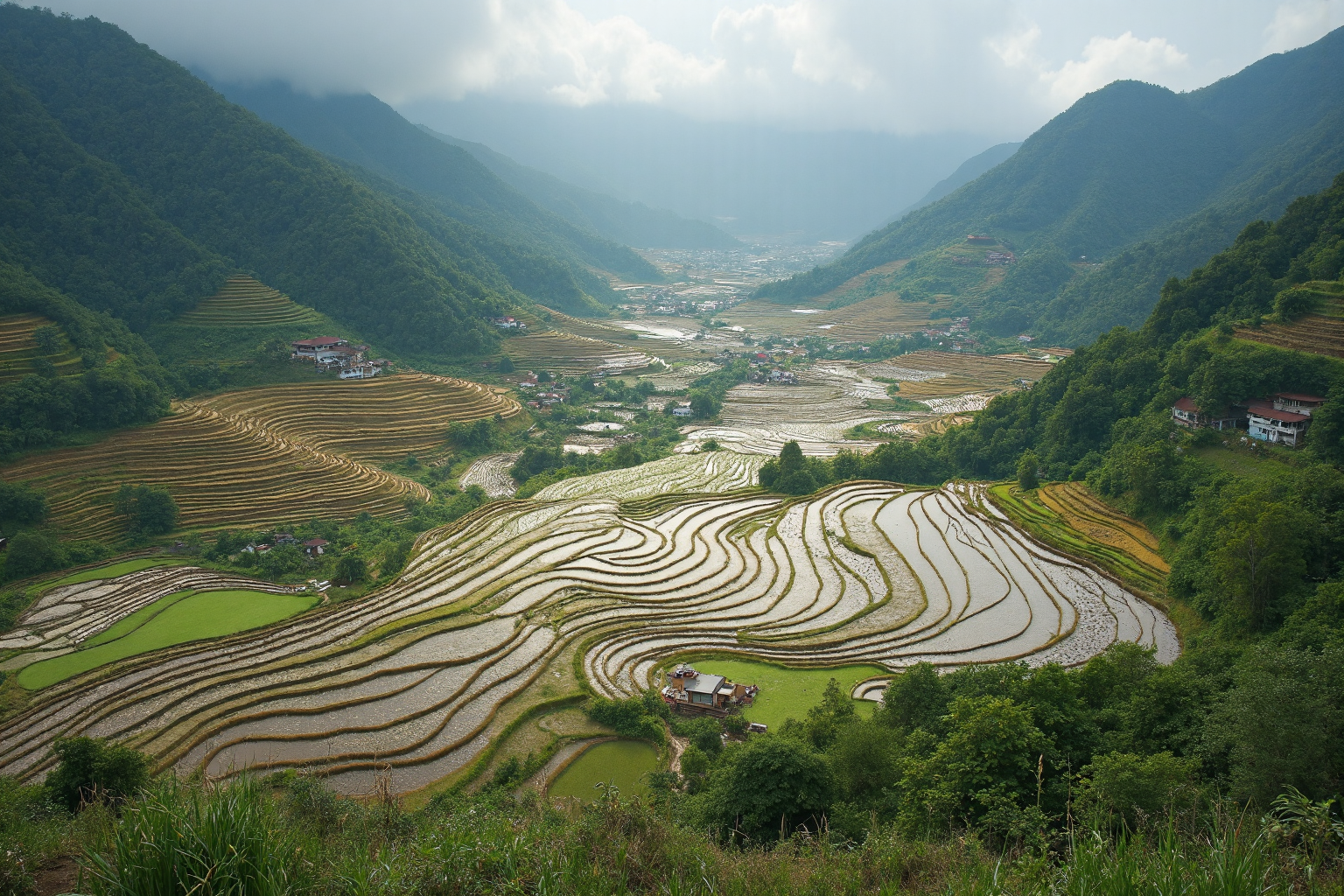
Ancient Ingenuity: Exploring the Sustainable Rice Terrace Irrigation Systems of Northern Vietnam
The cascading rice terraces of Northern Vietnam, etched into the steep slopes of Mu Cang Chai, Sapa, and Hoang Su Phi, have long fascinated visitors with their stunning beauty and intricate design. Known as ‘stairways to heaven,’ these terraces are far more than visual marvels—they embody centuries of ancient bioengineering and sustainable practices, primarily developed by the Hmong, Dao, and Tay ethnic groups. Dating back over a thousand years, these terraces provide a profound example of how indigenous knowledge fosters harmony between humans and nature. This article explores the technical brilliance of these traditional irrigation systems, examining their construction, maintenance, and adaptability in the face of modern challenges like climate change and urbanization. Beyond their cultural significance, these terraces serve as a powerful model of sustainable agriculture, proving that ancient wisdom remains relevant in contemporary practices.
Engineering Marvels: Construction and Water Flow Management
The rice terraces of Northern Vietnam stand as a testament to human ingenuity, showcasing a sophisticated understanding of hydraulic engineering principles applied over generations. Carved into the steep slopes of mountainous regions, these terraces represent a complex interplay of human effort and natural forces, creating a sustainable agricultural system that has thrived for centuries. The construction process begins with meticulous terracing, shaping the land into a series of cascading platforms that maximize arable land while minimizing erosion. Reinforced with locally sourced stone and packed earth, the terrace walls act as sturdy barriers, preventing landslides and ensuring the stability of the entire system. Each paddy within the terrace is precisely leveled to facilitate optimal water distribution, allowing for even irrigation and minimizing water waste. This intricate network of interconnected paddies forms the foundation of a gravity-fed irrigation system, a marvel of ancient engineering.
Water, sourced from mountain springs and streams, is channeled through a network of canals and bamboo pipes, carefully guided down the slopes from higher terraces to lower ones. This gravity-driven flow minimizes the need for manual pumping or complex irrigation mechanisms, reducing labor and energy requirements while promoting sustainable water management.
The ingenuity of the system lies in its ability to harness the natural topography and gravity to distribute water efficiently across vast stretches of terraced land. The precise leveling of each paddy ensures uniform water depth, crucial for healthy rice growth and maximizing yields. Furthermore, the interconnected nature of the terraces allows for controlled drainage, preventing waterlogging and ensuring that each plant receives the appropriate amount of water throughout its growth cycle. This careful management of water resources not only supports rice cultivation but also contributes to the overall ecological balance of the region. The construction and maintenance of these terraces require significant communal effort, reflecting the strong social bonds within the local communities. Traditional knowledge, passed down through generations, guides the construction techniques, water management practices, and the selection of appropriate rice varieties for each growing season.
This intergenerational knowledge transfer ensures the continued viability of the rice terraces, adapting to changing environmental conditions and preserving the cultural heritage associated with this unique agricultural practice. Visitors to these regions can witness firsthand the remarkable synergy between human ingenuity and natural landscapes, gaining a deeper appreciation for the sustainable practices that have shaped these iconic landscapes for centuries.
The vibrant green hues of the rice paddies, the intricate network of waterways, and the breathtaking views from the mountain slopes offer a unique travel experience that combines natural beauty with cultural immersion. Furthermore, the continued success of these traditional farming systems provides valuable insights into sustainable agriculture and water management practices that can be applied in other regions facing similar geographical and environmental challenges.
These ancient systems offer valuable lessons in resource management, demonstrating the potential for long-term sustainability through community-based conservation and adaptation to changing climates. The rice terraces of Northern Vietnam serve as a living laboratory, inspiring innovative solutions for sustainable agriculture and water management in a world increasingly concerned with environmental preservation and food security. For a deeper understanding of the technical and socio-cultural aspects of these systems, explore the sustainable water management analysis.
Community-Based Conservation: Ensuring System Longevity
The enduring productivity of Vietnam’s rice terraces stands as a testament to the meticulous care and community-based conservation practices employed for generations. These intricate systems, carved into the mountainsides, rely on a delicate balance of traditional knowledge, communal cooperation, and sustainable resource management. Local knowledge, passed down through families, dictates the timing and techniques for cleaning canals, repairing dikes, and managing water flow. This inherited wisdom ensures the efficient distribution of water throughout the terrace system, minimizing waste and maximizing crop yields. For example, the Red Dao people of Sapa use a sophisticated system of bamboo pipes and channels to divert water from mountain springs to their terraces, demonstrating a deep understanding of hydraulic principles.
On the flip side, community cooperation is paramount in maintaining these terrace systems. Families share responsibilities for maintaining the shared irrigation network, ensuring the continued productivity of the terraces. This collective effort not only strengthens social bonds within the community but also fosters a sense of shared responsibility for the land. Annual maintenance activities, often undertaken collaboratively before the planting season, involve clearing debris from canals, reinforcing dikes, and checking the integrity of bamboo pipes. These practices ensure the system’s resilience against heavy rains and minimize the risk of landslides, protecting both the terraces and the communities that depend on them.
The traditional farming practices employed in these regions contribute significantly to the sustainability of the rice terraces. The use of organic fertilizers, such as animal manure and compost, enriches the soil and minimizes environmental impact. Crop rotation and intercropping with other plants, like legumes, further enhance soil health and reduce the need for synthetic pesticides. These sustainable methods, combined with efficient water management practices, contribute to the long-term health and productivity of the terraces. Visitors to regions like Mu Cang Chai and Hoang Su Phi during the harvest season can witness firsthand the vibrant tapestry of colors created by the ripening rice, a testament to the effectiveness of these traditional practices. This sustainable approach to agriculture not only provides food security for local communities but also preserves the breathtaking beauty of these cultural landscapes for future generations. Exploring sustainable packaging solutions, such as refillable beauty products, can further inspire eco-friendly practices in various industries.
Adapting to Change: Climate Change and Traditional Systems
Climate change presents an unprecedented challenge to the ancient rice terrace systems of Northern Vietnam, threatening both their agricultural productivity and cultural significance. These intricate irrigation marvels, perfected over generations, are now disrupted by shifting rainfall patterns—marked by prolonged droughts and intensified monsoons—that compromise water availability. Extreme weather events, including typhoons and flash floods, further destabilize the terraces, increasing the risk of landslides and structural collapse. The delicate balance of water management, essential for rice cultivation and ecosystem health, is under severe strain, demanding urgent and innovative adaptation strategies to preserve these invaluable landscapes.
Local communities are responding to these climate pressures by blending ancestral wisdom with modern techniques to safeguard their terraces. Water conservation measures, such as rainwater harvesting and optimized irrigation scheduling, help mitigate scarcity during dry periods. Additionally, crop diversification—introducing drought-resistant rice varieties and alternative crops like vegetables and fruits—strengthens food security while reducing reliance on water-intensive monocultures. Reinforcing terrace walls with locally sourced materials like bamboo and stone, enhanced by contemporary engineering, improves resilience against heavy rainfall and erosion. These adaptations exemplify how traditional knowledge and innovation can coexist to address environmental challenges.
Regional initiatives, supported by governmental and non-governmental organizations, play a crucial role in scaling these adaptive strategies. Training programs and resource allocation empower communities to implement climate-resilient practices, such as integrating indigenous water-flow expertise with modern weather forecasting. Revived traditional methods, such as terracing and intercropping, further enhance soil health and water retention, ensuring the terraces remain productive despite climate variability. Beyond agriculture, these efforts preserve biodiversity and cultural heritage, underscoring the terraces’ role as both ecological and historical treasures.
The preservation of Northern Vietnam’s rice terraces extends beyond agricultural sustainability—it is vital for the livelihoods of countless communities. Sustainable tourism emerges as a key ally in this endeavor, offering economic support while fostering environmental stewardship. Travelers who engage with local communities gain firsthand insight into sustainable agriculture and water management, raising awareness about climate challenges and innovative solutions. This form of ecotourism not only bolsters regional economies but also amplifies global recognition of the terraces’ resilience and cultural value.
The adaptive resilience of Vietnam’s rice terrace communities serves as a model for harmonizing tradition and innovation in the face of climate change. Their ongoing efforts to innovate and preserve these landscapes highlight the importance of integrating traditional knowledge with modern technologies. By doing so, these communities ensure the long-term survival of their terraces, safeguarding both their heritage and the ecosystems that depend on them. Learn more about the sustainable legacy under threat.
Seasonal Planting and Water Availability
The agricultural calendar of the northern Vietnamese rice terraces is a testament to the harmonious relationship between humans and nature. Planting cycles are intricately linked to water availability, dictated by the rhythmic ebb and flow of the rainy and dry seasons. Different rice varieties, each with specific water requirements and growth durations, are strategically selected and cultivated throughout the year, optimizing both water use and yield. The timing of planting, transplanting, and harvesting is meticulously coordinated with the monsoon cycle, ensuring efficient water resource allocation and minimizing water stress on the crops. Traditional calendars, often based on lunar cycles and astronomical observations, serve as invaluable tools, guiding farmers in their decision-making and reflecting a deep understanding of the natural environment. For instance, the Red River Delta, a vital rice-producing region, sees farmers planting during the spring rains, utilizing the abundant water for the initial growth stages. As the rains subside, drought-resistant varieties are favored, maximizing the use of residual moisture. This intricate dance between water availability and rice variety selection is a cornerstone of sustainable agriculture in the region. The ingenious integration of indigenous knowledge with the natural water cycle ensures food security while minimizing environmental impact. The construction of the terraces themselves plays a crucial role in water management. The stepped design allows for controlled irrigation, where gravity guides water from the highest terraces down to the lower ones, mimicking the natural flow of water down a mountainside. This system minimizes water waste and ensures an even distribution across the entire cultivated area. The system also reduces soil erosion, a common problem in hilly terrains, as the terrace walls act as barriers, preventing topsoil from being washed away during heavy rains. Furthermore, the network of canals and bamboo pipes, meticulously engineered and maintained by the community, further enhances water distribution efficiency. These channels direct water precisely where it’s needed, minimizing runoff and maximizing absorption by the rice plants. This intricate network is a testament to the engineering prowess of the local communities, showcasing their ability to harness and manage water resources sustainably. Visitors to these regions can witness firsthand the harmonious blend of traditional practices and innovative solutions. Trekking through the terraces offers a unique opportunity to appreciate the ingenuity of these ancient systems, while also understanding the challenges posed by climate change and the adaptive strategies being employed. The preservation of these cultural landscapes is not only crucial for food security but also for maintaining biodiversity and supporting the livelihoods of countless communities who depend on these rice terraces. Explore the ancient ingenuity of Banaue rice terraces.
Traditional Water Rights: Community Management
Traditional water rights systems, deeply rooted in the cultural fabric of Northern Vietnam, are the cornerstone of equitable water distribution for the intricate rice terrace irrigation. These systems are not merely abstract concepts; they are living, breathing frameworks that dictate how water is allocated, managed, and conserved within the community. Often established through generations of customary laws and ancestral agreements, these systems emphasize communal responsibility and mutual dependence, ensuring that every family has access to the precious resource necessary for their agricultural practices. The allocation is not based on land ownership alone, but also on the historical contributions of families to the construction and maintenance of the irrigation infrastructure, creating a complex yet fair system. These traditional water rights systems are a critical element of sustainable agriculture in the region, fostering a sense of shared responsibility.
These systems are far from static; they evolve alongside community needs and environmental changes, reflecting the adaptability of traditional farming practices. For example, during periods of drought, water allocation may be adjusted to prioritize the most vulnerable fields, demonstrating the community’s commitment to collective well-being. The knowledge of these systems is passed down through oral tradition and practical training, ensuring that future generations are equipped to manage this essential resource effectively. Elders and community leaders are the custodians of this knowledge, playing a vital role in mediating disputes and upholding the established water management practices. They facilitate community discussions to resolve conflicts over water usage, ensuring that all voices are heard and that decisions are made in the best interests of the collective. These leaders often possess a deep understanding of local hydrology and the specific needs of different rice varieties, allowing them to make informed decisions about water allocation. Their role extends beyond conflict resolution to include educating younger members of the community about the importance of water conservation and the principles of the traditional water rights system. This community-based approach to water management not only promotes sustainability, but it also fosters social cohesion and strengthens the bonds within the community. The effectiveness of these systems is evident in the longevity of the rice terraces themselves, which have been cultivated for centuries without depleting the resources or causing significant environmental degradation. These systems are a testament to the power of traditional knowledge and community cooperation in achieving sustainable water management, offering valuable lessons for other regions facing similar challenges. Furthermore, these traditional water rights are not just about water allocation; they also encompass the responsibility of maintaining the entire irrigation system. Families are often assigned specific sections of canals or dikes to maintain, reinforcing the collective nature of the system. This shared responsibility ensures that the infrastructure remains in good condition, minimizing water loss and maximizing efficiency. The communal aspect also encourages the sharing of knowledge and best practices, further enhancing the sustainability of the system. Observing these practices offers a unique insight into the deep connection between the people, their land, and their water resources, making it a valuable experience for travelers interested in sustainable agriculture and traditional farming methods. The success of the rice terrace irrigation system is intricately linked to the effectiveness of the traditional water rights systems, highlighting the importance of community-based resource management in sustainable development. These systems provide a framework for equitable access to water, promoting social harmony and ensuring the long-term viability of the agricultural landscape.
Modernization and its Impact
Modern agricultural practices and technologies present both opportunities and challenges for the rice terraces of Northern Vietnam. While the judicious use of fertilizers and pesticides can increase yields in the short term, their long-term impact on water quality and soil health poses a significant threat to the delicate ecological balance of these ancient systems. For instance, fertilizer runoff can contaminate water sources, harming aquatic life and potentially affecting the potability of water used by downstream communities. Over-reliance on pesticides can also lead to the development of resistant pests, necessitating even stronger chemicals and further exacerbating the environmental impact. The introduction of mechanized farming, while potentially reducing labor, can disrupt traditional water management practices by altering the flow and distribution of water within the terrace systems.
Tractors and other heavy machinery can compact the soil, reducing its ability to absorb water and increasing the risk of erosion, especially on the steep slopes where the terraces are built. Finding a balance between modernization and preserving the integrity of these ancient systems is crucial for their sustainable future. One approach involves integrating modern technologies in a way that complements, rather than disrupts, traditional practices. For example, using sensors to monitor water levels and soil moisture can provide valuable data to inform irrigation decisions, optimizing water use and minimizing waste. This data-driven approach can enhance the efficiency of traditional water management systems without compromising their ecological integrity. Furthermore, promoting sustainable farming practices, such as crop diversification and integrated pest management, can reduce the need for chemical inputs while maintaining healthy yields.
Crop diversification, for example, can enhance soil fertility and reduce pest infestations naturally, minimizing the need for synthetic fertilizers and pesticides. The integration of tourism into these regions also presents both opportunities and challenges. While tourism can provide valuable economic benefits to local communities, it is essential to manage it sustainably to avoid negative impacts on the environment and cultural heritage.
But educating tourists about the importance of responsible travel and supporting local initiatives that prioritize sustainability can help ensure that tourism contributes to the long-term preservation of these unique landscapes. the future of the rice terraces of Northern Vietnam depends on finding a harmonious balance between modernization and tradition, leveraging the benefits of technology while respecting the wisdom of generations past.
By embracing sustainable practices, fostering community involvement, and promoting responsible tourism, we can help ensure that these magnificent agricultural landscapes continue to thrive for centuries to come.