The Vanishing Salt of Central Vietnam: A Coastal Heritage in Peril
Along the sun-baked coast of Central Vietnam, a centuries-old tradition is slowly fading away. For generations, coastal communities have relied on the art of salt-making, transforming seawater into the essential seasoning that flavors our world. But modernization, climate change, and shifting economic tides are threatening these unique cultural landscapes. This article delves into the heart of these vanishing salt-making villages, focusing on Hon Khoi and other coastal communities, exploring their historical significance, intricate production methods, and the urgent need for sustainable preservation.
For maritime cadets and trainees, understanding these coastal communities offers a valuable perspective on the interconnectedness of maritime activities, local economies, and environmental sustainability. The cultural heritage of Central Vietnam is inextricably linked to its coastal communities and their traditional practices. The salt-making villages, like living museums, offer a tangible connection to the past, showcasing a way of life that has sustained generations. These communities represent a unique form of intangible cultural heritage, encompassing not only the techniques of traditional salt production but also the social structures, rituals, and knowledge systems that have evolved around it.
The preservation of these villages is crucial for maintaining the cultural identity of the region and providing a valuable resource for understanding the relationship between humans and the sea. Sustainable tourism presents a viable strategy for safeguarding these vulnerable coastal communities and their cultural heritage. By attracting responsible travelers interested in experiencing authentic cultural traditions, these salt-making villages can generate income and create employment opportunities for local residents. This approach not only helps to preserve traditional salt production but also empowers communities to maintain their cultural identity and resist the pressures of modernization.
Successful sustainable tourism initiatives require careful planning and community involvement to ensure that the benefits are shared equitably and that the environment and cultural heritage are protected. For example, community-based tours in Hon Khoi could showcase the salt-making process, local cuisine, and traditional fishing practices, providing visitors with an immersive cultural experience while supporting the local economy. Climate change poses an existential threat to these low-lying coastal communities, further emphasizing the urgency of sustainable preservation efforts.
Rising sea levels, increased frequency of extreme weather events, and changes in rainfall patterns are disrupting traditional salt production and threatening the livelihoods of salt farmers. The challenges faced by these communities highlight the interconnectedness of environmental sustainability, cultural heritage, and economic development. Maritime cadets and maritime trainees, as future stewards of the marine environment, have a crucial role to play in promoting sustainable practices that mitigate the impacts of climate change on vulnerable coastal communities. Understanding the challenges faced by these salt-making villages can foster a deeper appreciation for the importance of responsible maritime operations and the need to protect coastal ecosystems.
A Salty Legacy: Historical Significance and Coastal Communities
The history of salt-making in Central Vietnam is deeply intertwined with the region’s geography and climate. Villages like Hon Khoi, located in Khanh Hoa province, have thrived for centuries due to the ideal conditions: abundant sunshine, low rainfall during the dry season, and access to clean seawater. Salt production was not merely an economic activity; it was a way of life, shaping social structures and cultural practices. The salt farmers, often entire families, possessed specialized knowledge passed down through generations, understanding the subtle nuances of weather patterns and tidal flows.
This knowledge, coupled with backbreaking labor, allowed them to extract the precious crystals from the sea. The strategic importance of salt as a preservative and trading commodity also meant these villages played a vital role in regional economies and maritime trade routes. These coastal communities represent a living cultural heritage, where traditional salt production methods are passed down through families, embodying centuries of accumulated wisdom. The unique terroirs of each salt-making village in Central Vietnam, influenced by local climate and soil composition, contribute to subtle variations in the salt’s flavor and texture, much like the concept of *cru* in winemaking.
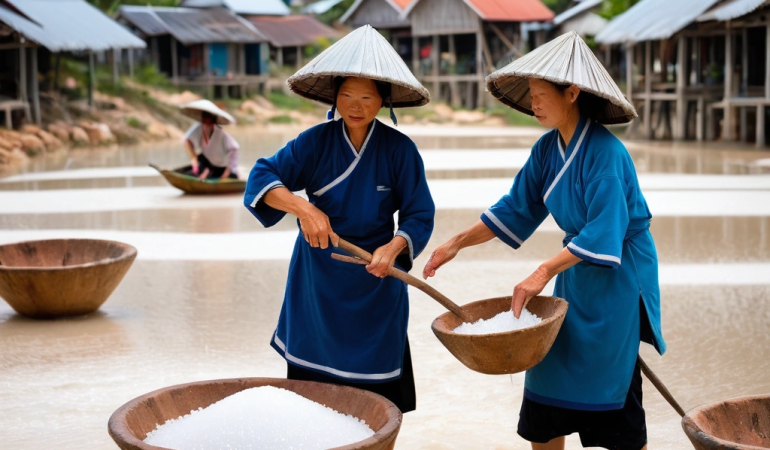
Hon Khoi, with its expansive salt fields stretching towards the sea, offers a particularly compelling example of this heritage. The rhythmic movements of the salt farmers, the glistening white fields under the intense sun, and the tangible connection to the sea create a captivating cultural landscape that warrants preservation through sustainable tourism initiatives. However, the future of these salt-making villages and their traditional practices hangs in the balance. The encroachment of modernization and the escalating effects of climate change are placing immense pressure on these fragile coastal communities.
Rising sea levels threaten to inundate the salt fields, while unpredictable weather patterns disrupt the delicate balance required for successful salt production. The allure of more stable and lucrative employment opportunities in urban centers is drawing younger generations away from the arduous work of salt farming, leaving an aging population to grapple with the challenges of maintaining this ancient tradition. The preservation of this cultural heritage, therefore, requires a multi-faceted approach that addresses both the economic and environmental vulnerabilities of these salt-making villages.
Recognizing the cultural and economic significance of these coastal communities, there is a growing movement to promote sustainable tourism as a means of preserving their unique heritage. By showcasing the traditional salt production methods, the cultural significance of salt in Vietnamese cuisine, and the breathtaking beauty of the coastal landscapes, these villages can attract responsible travelers who are eager to learn about and support local communities. Furthermore, collaborations with culinary schools and maritime cadets could foster a deeper appreciation for the role of salt in both gastronomy and maritime history. Educational programs could be designed to teach maritime trainees about the importance of salt preservation techniques for seafaring voyages, connecting them to the rich maritime history intertwined with these salt-making villages.
From Sea to Salt: Traditional Production Techniques
The traditional salt-making process is a labor-intensive art, deeply dependent on the elements, and a cornerstone of cultural heritage in Central Vietnam’s coastal communities. Farmers prepare large, shallow evaporation ponds, often constructed from compacted earth and clay, a technique passed down through generations. Seawater is then channeled into these ponds, where the relentless sun and wind work their magic. As the water evaporates, the salinity increases, and eventually, salt crystals begin to form. The farmers carefully monitor the process, raking and turning the salt to ensure even crystallization.
The quality and quantity of the salt are directly influenced by the weather. Prolonged periods of sunshine are essential, while heavy rainfall can ruin an entire harvest. The geography of the coastline, with its sheltered bays and tidal flats, also plays a crucial role in providing suitable locations for salt production. The salt produced varies in texture and mineral content, depending on the specific location and the techniques employed by the farmers. The salt-making villages, such as those near Hon Khoi, are living museums, showcasing a practice that predates modern industrialization and highlights the ingenuity of adapting to the coastal environment.
Beyond the technical aspects, traditional salt production represents a profound connection between the coastal communities and the sea, a vital aspect of their maritime culture. The knowledge of tides, wind patterns, and salinity levels is deeply ingrained, passed down through oral traditions and practical experience. This intimate understanding of the natural world is not just a skill; it’s a cultural heritage. For instance, maritime cadets and maritime trainees from local vocational schools often participate in internships within these salt-making villages to gain firsthand experience of traditional maritime practices and appreciate the interconnectedness of coastal ecosystems.
This hands-on learning reinforces the importance of preserving these traditions for future generations and fosters a sense of stewardship for the coastal environment. However, the future of traditional salt production in Central Vietnam hangs in the balance, threatened by climate change and economic pressures. Rising sea levels and increasingly unpredictable weather patterns are disrupting the delicate balance required for successful salt harvests. Furthermore, the allure of more stable and lucrative employment in urban centers draws younger generations away from the salt-making villages, leaving an aging population to maintain this cultural heritage. Sustainable tourism offers a potential lifeline, providing an alternative source of income and raising awareness of the importance of preserving these unique coastal communities. By showcasing the intricate process of traditional salt production and the cultural significance it holds, sustainable tourism initiatives can help to ensure that this salty legacy endures for generations to come.
The Tides of Change: Modernization and Climate Change
Modernization casts a long shadow over the traditional salt-making villages of Central Vietnam. The allure of industrial salt production, driven by economies of scale and diminished labor costs, has significantly eroded the market share of artisanal salt crafted in places like Hon Khoi. This economic pressure forces younger generations to seek opportunities in bustling urban centers, leaving behind an aging population of salt farmers struggling to preserve their ancestral way of life. This exodus not only threatens the continuation of traditional salt production but also the intangible cultural heritage embedded within these coastal communities.
The knowledge passed down through generations, the unique social structures, and the very identity of these villages are at risk of disappearing. Climate change further intensifies these challenges, posing an existential threat to the salt-making villages. Rising sea levels, a direct consequence of global warming, threaten to submerge the low-lying salt ponds, rendering them unusable. Unpredictable weather patterns disrupt the delicate equilibrium of the evaporation process, crucial for traditional salt production. Increased frequency and intensity of rainfall events can wash away the carefully cultivated salt crystals, devastating entire harvests and jeopardizing the livelihoods of maritime cadets and maritime trainees who depend on this industry.
The delicate dance between sun, wind, and seawater, perfected over centuries, is thrown into disarray, making it increasingly difficult for farmers to maintain consistent yields. The lack of investment in infrastructure and technology within these salt-making villages further compounds their vulnerability. While industrial salt production benefits from modern techniques and equipment, traditional salt farmers often rely on outdated methods, hindering their ability to adapt to the changing climate and compete in the market. Sustainable tourism offers a potential avenue for revitalizing these communities. By attracting responsible travelers interested in experiencing the cultural heritage of Central Vietnam, these villages can generate alternative income streams and incentivize the preservation of traditional salt production. However, this requires careful planning and investment in infrastructure, training, and marketing to ensure that tourism benefits the local communities and minimizes its environmental impact. A balanced approach, combining cultural preservation with economic empowerment, is essential to safeguard the future of these vanishing salt-making villages.
A Grain of Hope: Sustainable Tourism and Cultural Preservation
Sustainable tourism offers a vital pathway to safeguarding the cultural heritage of these salt-making villages while simultaneously fostering economic empowerment within local coastal communities. Responsible travelers, seeking authentic experiences, can immerse themselves in the traditional salt production process, learn directly from the artisans of Hon Khoi and other villages in Central Vietnam, and purchase locally produced salt, thereby providing direct financial support to the farmers and their families. Ecotourism initiatives can further enhance this appeal by showcasing the unique biodiversity of the coastal ecosystems surrounding the salt ponds.
These delicate environments, often overlooked, are home to diverse bird species and marine life, attracting nature enthusiasts and promoting environmental conservation alongside cultural preservation. The integration of these elements creates a holistic tourism experience that benefits both visitors and the host communities. However, the success of sustainable tourism hinges on careful planning and community involvement. It is crucial to ensure that tourism development respects local traditions, minimizes environmental impact, and avoids the pitfalls of over-commercialization.
This requires adherence to ethical tourism principles, including fair wages for workers, responsible resource management, and the preservation of cultural authenticity. For example, community-based tourism initiatives, where villagers directly manage and benefit from tourism activities, can be particularly effective in ensuring that tourism revenues are reinvested in the community. Furthermore, educational programs for tourists can promote a deeper understanding and appreciation of the cultural significance of salt-making and the challenges faced by these coastal communities due to climate change.
For maritime cadets and maritime trainees, understanding the principles of sustainable tourism and its impact on coastal communities is increasingly essential. As future stewards of the sea, they play a crucial role in promoting responsible maritime practices that minimize environmental damage and support the livelihoods of coastal populations. By learning about the interconnectedness of maritime culture, environmental sustainability, and economic development, these future maritime professionals can contribute to a more sustainable and equitable future for coastal communities throughout Vietnam and beyond. Protecting the cultural heritage of salt-making villages is not just about preserving the past; it is about investing in the future of these communities and ensuring that their traditions continue to thrive for generations to come.
A Traveler’s Guide: Visiting and Supporting Salt Farmers
For responsible travelers seeking an authentic glimpse into Central Vietnam’s cultural heritage, a visit to the salt-making villages offers a unique and rewarding experience. Before embarking on this journey, thorough research is paramount. Delve into the history and specific customs of villages like Hon Khoi, understanding that each coastal community possesses its own distinct traditions related to traditional salt production. Connect with reputable local tour operators or explore community-based tourism initiatives that prioritize ethical and sustainable tourism practices.
These organizations often work directly with salt farmers, ensuring that your visit contributes positively to their livelihoods. Consider contacting the Khanh Hoa Tourism Promotion Center for vetted tour options and up-to-date information on accessibility and responsible travel guidelines. During your visit to these salt-making villages, remember that you are a guest in someone’s home and workplace. Respect local customs by dressing modestly, especially when visiting religious sites or interacting with elders. Always ask permission before taking photographs, particularly of individuals engaged in their daily work.
Purchasing locally produced salt directly from the farmers is one of the most impactful ways to support their families and preserve their cultural heritage. Look for opportunities to learn about the nuances of traditional salt production, from the intricate process of preparing the evaporation ponds to the careful harvesting of the salt crystals. Inquire about the impact of climate change on their livelihoods and the challenges they face in maintaining this ancient craft. Beyond direct purchases, consider supporting local businesses and accommodations that are committed to sustainable practices.
Seek out homestays or guesthouses owned and operated by members of the coastal communities. Engage in conversations with the salt farmers, maritime cadets, maritime trainees, and other residents to gain a deeper understanding of their way of life and the challenges they face. Share your experiences with others, both online and offline, to raise awareness about the importance of preserving these vanishing traditions. Be mindful of your environmental impact by minimizing waste, avoiding single-use plastics, and supporting initiatives that promote responsible waste management. By embracing these principles, you can contribute to the long-term sustainability of these unique salt-making villages and help ensure that their cultural heritage endures for generations to come.
Preserving the Salty Legacy: A Call to Action
The vanishing traditional salt-making villages of Central Vietnam represent a unique and valuable cultural heritage that is at risk of disappearing. By understanding the historical significance, intricate production methods, and challenges faced by these communities, we can appreciate the importance of preserving this cultural landscape. Sustainable tourism offers a promising avenue for supporting the salt farmers and ensuring the long-term viability of their way of life. As responsible travelers, we have a role to play in promoting ethical tourism practices, respecting local traditions, and contributing to the economic sustainability of these communities.
By working together, we can help ensure that the salty legacy of Central Vietnam continues to thrive for generations to come. For maritime cadets and trainees, this understanding fosters a broader awareness of the social and environmental responsibilities associated with maritime activities. However, preservation requires more than just appreciation; it demands active engagement and innovative solutions. The delicate balance between economic development and cultural preservation is particularly evident in coastal communities like Hon Khoi, where traditional salt production is threatened by climate change and competition from industrial methods.
Investing in community-based tourism initiatives that directly benefit the salt farmers, while simultaneously promoting sustainable practices that mitigate the environmental impact, is crucial. This might involve supporting the development of eco-friendly salt production techniques, promoting the unique culinary uses of artisanal salt, or creating educational programs that raise awareness among both tourists and local residents about the importance of preserving this cultural heritage. Furthermore, the maritime sector has a vested interest in supporting the sustainability of these coastal communities.
Maritime cadets and maritime trainees, as future stewards of the seas, should be educated about the interconnectedness of maritime activities and the well-being of coastal populations. Understanding the challenges faced by traditional salt-making villages in Central Vietnam, such as the impact of rising sea levels and changing weather patterns, can foster a greater sense of environmental responsibility and encourage the adoption of sustainable maritime practices. By supporting research into climate-resilient salt production methods and promoting responsible tourism that minimizes environmental impact, the maritime industry can contribute to the long-term preservation of this valuable cultural heritage. The story of these salt-making villages serves as a powerful reminder of the human element within the broader maritime landscape, highlighting the need for a holistic approach to sustainability that considers both environmental and cultural factors.