The Enduring Legacy of Salt: A Journey into Central Vietnam's Traditional Salt-Making Villages
For centuries, the salt fields of Central Vietnam have shimmered under the sun, a testament to the enduring legacy of traditional salt-making. These shimmering expanses, stretching along the coastline, represent more than just a source of livelihood; they embody a way of life intricately woven into the cultural fabric of Vietnam. Passed down through generations, these ancient techniques are a living example of sustainable practices, deeply connected to the natural rhythms of the sea and sun. This article delves into the heart of these resilient communities, exploring the intricate processes of artisanal salt production, the rich cultural heritage they represent, the culinary traditions they enhance, and the challenges they face in the modern era. From the picturesque salt mountains of Hon Khoi to the expansive salt pans of Sa Huynh, Central Vietnam offers a unique travel experience that allows visitors to witness these time-honored traditions firsthand. The region’s unique geography and climate play a crucial role in the distinctive flavor profiles of Vietnamese sea salt, attracting culinary enthusiasts eager to explore its nuances.
We will examine the impact of industrialization on these traditional salt farming families and explore the ongoing initiatives aimed at preserving this vital cultural heritage for future generations. The delicate balance between tradition and progress is evident in the lives of the salt farmers, who strive to maintain their ancestral practices while adapting to the pressures of a changing world. Their stories offer a powerful testament to the resilience of human spirit and the importance of preserving artisanal practices that connect us to the land, the sea, and our shared cultural heritage. By understanding the challenges they face, from fluctuating weather patterns linked to climate change to the economic pressures of competing with industrial salt production, we can better appreciate the significance of supporting sustainable practices that empower these communities. Furthermore, exploring the culinary uses of Vietnamese sea salt, from its role in traditional dishes to its application in modern gourmet cuisine, reveals its profound impact on Vietnamese culinary traditions. The journey into these salt-making villages is not just a travel experience; it’s an immersion into a living museum of cultural heritage, a celebration of artisanal craftsmanship, and a call to action for sustainable living.
The Ancient Art of Salt Making
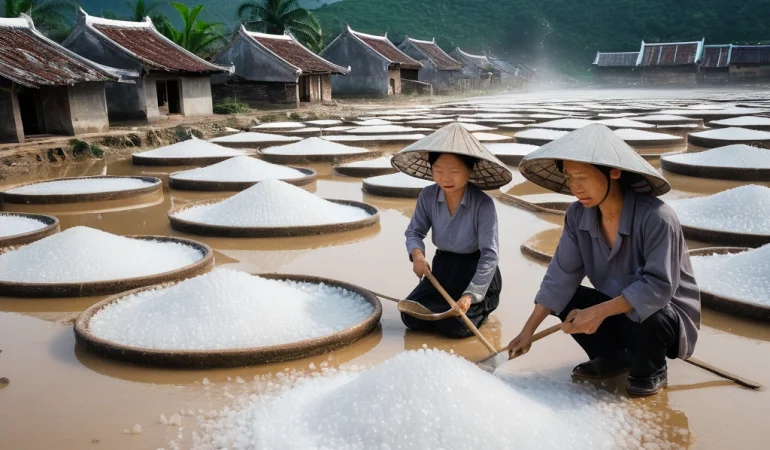
From before sunrise to well after sunset, salt farmers in central Vietnam are locked in a rhythm as old as the sea itself—a daily dance of labor passed down through generations. It’s a surprisingly hands-on process. They don’t just *make* salt; they coax it from the ocean, carefully guiding pristine seawater into a network of shallow ponds. These aren’t just any ponds, mind you—they’re often built from clay, meticulously maintained, and designed to soak up every last ray of sun. It’s a remarkably sustainable system, really, letting the water evaporate slowly over days, concentrating the brine and all the minerals within.
But it’s more than just letting the sun do the work. You need to *know* the land, the wind, the subtle shifts in the sea—a deep, intuitive understanding that comes from years spent immersed in the environment. It’s a connection that runs bone-deep for these families.
And then, almost magically, it happens. As the sun and wind work their magic, delicate salt crystals begin to form—a beautiful, tangible reward for all that patience. These aren’t just crystals, though; they’re a piece of Vietnamese culture, a symbol of a relationship with the sea that stretches back centuries. It’s a slow art, this salt making, a deliberate process that stands in stark contrast to the speed of industrial production.
Every step is done by hand, emphasizing skill and preserving a heritage that’s increasingly rare. Farmers learn the nuances of the process from their parents and grandparents, knowledge that allows them to produce a salt prized for its unique flavor and mineral content—something you just don’t get with mass-produced stuff. It’s not simply about the salt itself, but about maintaining a way of life, honoring those who came before.
In fact, the distinctive character of the sea salt varieties from these regions is *because* of these traditional methods. The mineral-rich waters off the Vietnamese coast, combined with the specific techniques passed down in each village, create a stunning diversity of flavors and culinary applications. The salt fields become more than just places of production—they’re cultural and culinary destinations, drawing travelers seeking authentic experiences and a glimpse into sustainable practices.
Of course, it’s not all smooth sailing. Industrialization casts a long shadow, and the rise of large-scale salt production—focused on efficiency and low costs—has created real economic hardship for these traditional farmers. It’s a tough market to compete in. But despite the challenges, these communities persevere, demonstrating a remarkable resilience and a fierce commitment to their heritage. They’re not just making salt; they’re safeguarding a legacy. And that dedication, combined with the exceptional quality of the salt itself, makes the fields of central Vietnam something truly special—a place worth preserving, and definitely worth visiting.
Voices from the Salt Pans: Stories of Resilience
Step onto the salt pans of Central Vietnam, and you’ll meet families whose lives are intricately woven into the fabric of this ancient craft. Generations have toiled under the sun, their hands shaping the salt crystals that have flavored Vietnamese cuisine for centuries. For these salt farmers, the connection to the land and sea isn’t just a livelihood; it’s a profound part of their cultural identity, passed down through stories and time-honored techniques. Speaking with them, you’ll hear tales of resilience, of adapting to the rhythms of nature, and of the deep satisfaction derived from producing a vital ingredient that graces tables across the country. Their artisanal practices, rooted in sustainable methods, represent a living heritage that contributes to the rich tapestry of Vietnamese culinary traditions. The Nguyen family, for instance, has been producing salt in Hon Khoi for over a century, using traditional wooden rakes and bamboo baskets.
They explain how the subtle variations in weather, from the intensity of the sun to the direction of the wind, influence the final product, resulting in a spectrum of salt varieties, each with its unique character. These families face an array of challenges, including fluctuating weather patterns intensified by climate change. Unpredictable rainfall and increased storm surges threaten the delicate balance of the salt pans, impacting both the quantity and quality of the harvest. This vulnerability underscores the importance of sustainable practices and the need for initiatives that support these communities in adapting to the changing environment.
The increasing pressure of industrialization presents another significant hurdle. Large-scale salt production, while efficient, often overlooks the environmental and social costs, threatening the livelihoods of traditional salt farmers and the preservation of their artisanal methods. The story of Mrs. Tran, a salt farmer in the village of Sa Huynh, exemplifies this struggle.
She describes the difficulty of competing with cheaper, industrially produced salt, and the emotional toll of potentially losing a way of life that has sustained her family for generations. Despite these challenges, the spirit of these communities remains unbroken. They understand the value of their heritage and the importance of preserving their traditions for future generations.
Many are embracing sustainable tourism, welcoming visitors to experience the art of salt making firsthand, sharing their stories, and offering a taste of the unique flavors of their labor. This burgeoning culinary tourism not only provides an alternative income stream but also raises awareness about the cultural significance of traditional salt production and the need for its continued support.
By experiencing the process, tasting the salt, and hearing the stories of the families, visitors gain a deeper appreciation for the enduring legacy of these Vietnamese salt-making villages.
A Spectrum of Salt: Varieties and Culinary Applications
Vietnamese sea salt, harvested from mineral-rich coastal waters using time-honored artisanal practices, offers a spectrum of flavors far beyond ordinary table salt. These unique flavor profiles result from traditional production methods and the specific terroir of central Vietnam, shaping culinary traditions for generations. The spectrum ranges from delicate fleur de sel, prized for its subtle brininess and fine texture, to coarser, mineral-rich varieties like muối hột, each contributing uniquely to Vietnamese cuisine.
Fleur de sel, meaning “flower of salt,” is harvested by hand from the surface of evaporating ponds, capturing the purest, most delicate crystals. Its subtle flavor makes it ideal as a finishing salt, perfect for sprinkling over salads or enhancing fresh fruit. In contrast, muối hột features larger, coarser crystals and a robust mineral content. This variety is traditionally used in dipping sauces, marinades, and for preserving foods.
The sustainable practices employed in traditional Vietnamese salt making contribute significantly to the salt’s distinctive qualities. Relying solely on natural evaporation powered by sun and wind minimizes environmental impact, reflecting a deep respect for nature central to Vietnamese culture. This connection to the land and sea is embodied by generations of salt farming families who dedicate their lives to the craft, passing down ancient techniques and knowledge.
Visiting these salt farms offers a unique culinary tourism opportunity, allowing travelers to witness the artisanal process firsthand, learn about salt’s cultural significance, and appreciate the nuanced flavors. The shimmering salt fields provide a picturesque backdrop showcasing Vietnam’s coastal beauty. The growing popularity of this tourism provides vital economic support, helping communities preserve their cultural heritage against industrial salt production pressures. Purchasing artisanal Vietnamese sea salt elevates culinary experiences while supporting sustainable livelihoods and preserving a centuries-old tradition.
The Impact of Industrialization: A Struggle for Survival
The encroachment of industrial salt production presents a formidable challenge to the traditional salt-making communities of Central Vietnam. Unlike the artisanal methods that have been honed over generations, large-scale industrial operations prioritize efficiency and volume, often at the expense of quality and environmental sustainability. This shift has led to a significant drop in the market value of traditionally produced sea salt, making it increasingly difficult for salt farming families to compete and maintain their livelihoods. The resulting economic hardship jeopardizes not only their immediate well-being but also the preservation of a rich cultural heritage inextricably linked to these ancient techniques. Traditional salt farming in Vietnam is more than just a method of production; it’s a cultural practice that embodies a deep connection to the land and sea. The intricate knowledge of weather patterns, tidal movements, and the subtle nuances of salt crystal formation is passed down through families, representing a living history. The rise of industrial salt production disrupts this delicate balance, threatening to erase a vital part of Vietnamese cultural heritage. This loss extends beyond the immediate economic impact, affecting the social fabric of these communities and the collective memory of their unique artisanal practices. The culinary world also stands to lose from the decline of traditional salt making. The unique flavor profiles of Vietnamese sea salt, influenced by the mineral-rich coastal waters and traditional production methods, are distinct from the uniform taste of industrially produced salt.
From the delicate fleur de sel, used to enhance the subtle flavors of seafood, to the coarser, mineral-rich varieties that are essential in fermented dishes, each type of artisanal salt contributes to the diversity of Vietnamese cuisine. The shift towards industrial salt not only diminishes the range of culinary experiences but also undermines the traditions that have shaped Vietnamese gastronomy for centuries. Furthermore, the impact of industrialization extends to sustainable practices. Traditional salt farming is inherently a low-impact process, relying on the natural forces of sun and wind and often employing sustainable water management techniques. In contrast, industrial salt production can involve environmentally damaging practices, such as the use of heavy machinery and the discharge of concentrated brine into the surrounding ecosystems. The loss of traditional methods not only weakens the cultural landscape but also potentially leads to unsustainable environmental practices. The decline of salt farming families also has implications for culinary tourism. These traditional salt fields offer a unique window into Vietnamese culture and artisanal practices, providing an authentic and enriching experience for visitors. The erosion of these traditions diminishes the potential for sustainable tourism, impacting local economies and the opportunity to share this cultural heritage with the world. Therefore, safeguarding the future of traditional salt production is not only a matter of economic survival but also an essential step in preserving a unique aspect of Vietnamese culture and its sustainable practices.
Preserving a Heritage: Initiatives and Solutions
Various initiatives are being implemented to support traditional salt-making communities in Vietnam, emphasizing the preservation of both an essential artisanal practice and a vital cultural heritage. These efforts include promoting sustainable tourism, which allows visitors to observe ancient salt-making techniques firsthand, and establishing cooperatives that empower salt farming families. Cooperatives enable collective marketing, giving families greater control over pricing and distribution while serving as hubs for knowledge transfer to younger generations. This ensures the continuity of time-honored sea salt production methods, safeguarding the cultural legacy of coastal communities. Additionally, organizations are raising awareness about the unique qualities of Vietnamese artisanal salt, highlighting its superior flavor and mineral content compared to industrial alternatives. This awareness drives demand for handcrafted products, providing stable income for families and reinforcing sustainable practices.
Culinary tourism has emerged as a key strategy to engage communities and visitors in the salt-making process. Travelers can participate in hands-on workshops led by local artisans, learning the nuances of traditional techniques and experiencing Vietnamese sea salt in authentic dishes. This form of tourism generates income while fostering appreciation for cultural heritage and sustainable methods. By offering immersive experiences, such as guided tours that explain the historical and cultural significance of salt production, these initiatives provide economic opportunities and promote responsible travel. They also create meaningful connections between visitors and the land, offering an alternative to mass tourism and emphasizing the value of preserving traditional practices.
Economic empowerment through fair trade and direct-to-consumer sales is another critical initiative. By bypassing intermediaries, these models ensure salt farmers receive fair prices for their labor and high-quality products. This approach makes traditional salt production economically viable, reducing the incentive to adopt environmentally harmful industrial methods. Direct sales also allow consumers to trace the origins of their salt, fostering a deeper connection to the product and its producers. Such transparency underscores the cultural and culinary value of artisanal salt-making, reinforcing its role in both heritage and modern gastronomy.
Modern technologies are being integrated thoughtfully to enhance traditional salt-making without compromising its authenticity. Efforts include improving water management, optimizing storage solutions, and assisting with marketing and branding. These innovations help families increase productivity and access broader markets while maintaining ancient techniques. By blending traditional wisdom with contemporary solutions, these initiatives aim to secure the long-term viability of salt farming. This balance between innovation and tradition is essential for countering industrialization’s negative impacts and ensuring the sustainability of coastal communities.
Protecting salt fields as cultural landscapes is a growing priority, with advocacy for policies that prevent development and promote sustainable land management. Preserving these coastal environments is crucial not only for continuing salt production but also for maintaining ecosystem health. By supporting communities through economic, cultural, and environmental initiatives, these efforts address multiple challenges simultaneously. This holistic approach—combining economic empowerment, heritage preservation, and ecological conservation—offers a sustainable future for traditional salt-making in Vietnam, ensuring its relevance for generations to come.
The Cultural Significance: A Legacy Worth Preserving
Beyond the economic considerations, the cultural significance of traditional salt making in Vietnam cannot be overstated. It represents a profound connection to the land and sea, a testament to ancestral knowledge passed down through generations, and a way of life intricately woven into the fabric of Vietnamese coastal communities. For centuries, salt farming families have lived in harmony with the tides, their livelihoods intrinsically linked to the natural rhythms of the environment. This deep-rooted relationship has shaped not only their daily routines but also their cultural identity, fostering a strong sense of community and shared heritage. Traditional salt-making practices are often accompanied by unique rituals and ceremonies, reflecting the reverence with which salt is regarded. These ceremonies, often tied to harvest seasons or ancestral veneration, offer a glimpse into the spiritual beliefs and cultural values associated with this ancient craft.
Furthermore, the knowledge of salt production, from constructing the evaporation ponds to harvesting and processing the salt crystals, is a treasured legacy transmitted within families. This artisanal knowledge, honed over centuries, represents a valuable form of intangible cultural heritage that deserves to be protected and celebrated. The salt fields themselves become living museums, showcasing the ingenuity and adaptability of Vietnamese farmers in harnessing natural resources.
Visiting these sites offers a unique opportunity for cultural tourism, allowing travelers to witness firsthand the artistry of traditional salt making and connect with the local communities who keep this heritage alive. The culinary traditions of Vietnam are also deeply intertwined with the unique varieties of sea salt produced. From the delicate fleur de sel, prized for its subtle flavor and delicate texture, to the coarser, mineral-rich varieties used in everyday cooking, Vietnamese sea salt enhances the flavors of the nation’s cuisine. This connection between artisanal salt and culinary practices further underscores the importance of preserving traditional salt-making methods.
However, the rise of industrial salt production poses a significant threat to this cultural heritage. The competition from large-scale operations often undercuts the livelihoods of traditional salt farmers, jeopardizing not only their economic stability but also the cultural practices associated with their craft. Supporting sustainable practices and fair trade initiatives can help ensure the survival of these communities and the preservation of their invaluable cultural contributions.
By recognizing the cultural value embedded in every grain of salt, we can help safeguard a vital part of Vietnam’s heritage for future generations.
Conclusion: A Future for Traditional Salt Making
The salt fields of Central Vietnam offer a glimpse into a world where tradition and resilience intertwine, a testament to the enduring power of human connection to nature and ancestral practices. These shimmering landscapes, shaped by generations of salt farmers, represent not just a livelihood but a vital piece of Vietnam’s cultural heritage. By supporting these communities and appreciating the value of their craft, we can help ensure that this ancient legacy continues to thrive for generations to come. The survival of traditional salt-making practices hinges on a delicate balance between economic realities and cultural preservation. The increasing pressures of industrialization and competition from large-scale salt producers pose a significant threat to the livelihoods of these artisanal salt farmers. Initiatives focused on sustainable tourism offer a promising path forward, allowing travelers to experience the unique beauty of the salt fields while directly contributing to the economic well-being of local communities.
That said, culinary tourism centered around traditional Vietnamese sea salt varieties can further enhance the value of these artisanal products, highlighting their distinct flavor profiles and the rich cultural heritage they represent. Imagine savoring a dish seasoned with fleur de sel harvested from these ancient salt pans, a taste of history passed down through generations. Furthermore, promoting sustainable practices within the salt-making process itself is crucial for long-term viability. This includes exploring methods to minimize environmental impact and conserve resources, ensuring the delicate coastal ecosystems remain healthy and productive. Supporting cooperatives that empower salt farming families and provide access to fair markets is essential for their economic independence and the preservation of their ancient techniques. These cooperatives can also play a crucial role in educating younger generations about the importance of their salt-making heritage, fostering a sense of pride and ensuring the continuation of these time-honored traditions.
The cultural significance of traditional salt making extends beyond the economic realm, representing a deep connection to the land, a respect for ancestral knowledge, and a way of life intricately woven into the fabric of Vietnamese society. Preserving this heritage is not merely about safeguarding a craft; it’s about protecting a living testament to human ingenuity, resilience, and the enduring bond between people and their environment.
From the meticulous construction of evaporation ponds to the careful harvesting of salt crystals, every step in the process reflects a profound understanding of nature’s rhythms and a deep respect for the delicate balance that sustains life. By recognizing and valuing the cultural and ecological significance of these traditional salt-making villages, we can contribute to a future where heritage and sustainability go hand in hand, ensuring that the shimmering salt pans of Central Vietnam continue to enrich the lives of generations to come.