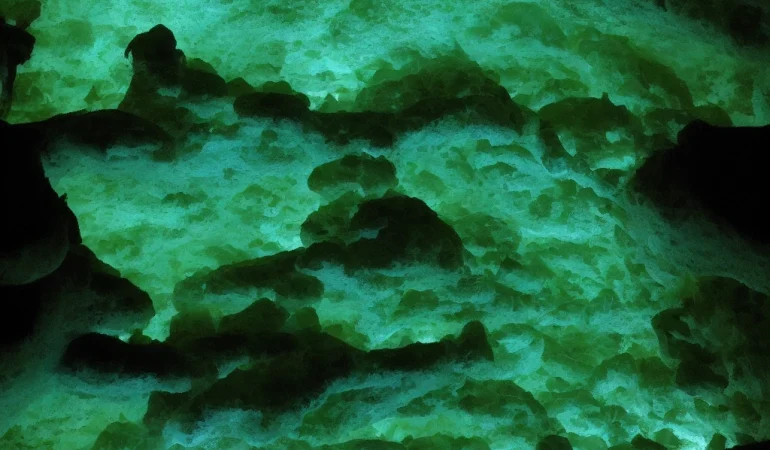
A Starlit Voyage Beneath New Zealand
Gliding silently through the cavernous void of the Waitomo Glowworm Caves in New Zealand’s North Island is a truly otherworldly experience. As the boat gently slices through the still underground river, visitors are greeted by a breathtaking canopy of shimmering stars that are not celestial, but rather a living constellation of bioluminescent glowworms. This natural wonder has captivated adventurous travelers and nature enthusiasts for generations, offering a glimpse into a subterranean realm where the ordinary rules of light and life seem to bend.
For those seeking an immersive and educational journey into New Zealand’s stunning landscapes, the Waitomo Glowworm Caves stand as a must-see destination. As the boat drifts through the darkness, the cave’s ancient limestone walls give way to a mesmerizing display of nature’s ingenuity. The tiny Arachnocampa luminosa larvae, each no larger than a human finger, produce a soft glow through a natural chemical reaction, creating the illusion of a starry night sky suspended overhead. This bioluminescent display is the result of millions of years of geological and biological evolution, a testament to the delicate balance of the cave’s unique ecosystem.
Beyond the captivating visual spectacle, the Waitomo Glowworm Caves also offer a window into the region’s rich natural history. Formed over 300 million years ago from the accumulation of marine organisms, the porous limestone of the Waitomo region was gradually sculpted by water into an intricate network of caves, sinkholes, and underground rivers. This geological marvel invites visitors to explore the ancient past and marvel at the power of nature to shape the landscape over millennia.
As the boat glides through the still waters, the sense of tranquility and wonder is palpable. The silence is broken only by the gentle lapping of the river and the occasional soft chirp of the glowworms, creating an immersive and serene atmosphere that transports visitors to a realm far removed from the outside world. For nature enthusiasts and adventure seekers alike, the Waitomo Glowworm Caves offer a truly unique and unforgettable experience, blending the captivating beauty of bioluminescence with the rich history and conservation efforts that have preserved this natural wonder for generations.
Geological Marvels and Ancient Legacies
The Waitomo Glowworm Caves stand as a testament to Earth’s patient artistry, formed through an intricate geological dance spanning over 300 million years. The foundation of this subterranean masterpiece began in the ancient seabed of the Waitomo region, where countless marine organisms gradually accumulated, their calcium-rich remains slowly transforming into the limestone that would become the caves’ backbone. This porous rock, technically known as karst limestone, proved to be the perfect medium for nature’s sculptural process, as slightly acidic rainwater slowly dissolved the stone, carving out an extensive network of caves, sinkholes, and underground rivers that continue to evolve today.
The most renowned sections of this vast underground system, the Ruakuri Cave and the Glowworm Cave, represent only a fraction of the region’s extensive karst landscape. Geological surveys have revealed that the Waitomo area contains over 300 mapped limestone caves, though experts believe many more remain undiscovered. The caves’ formation process, known as speleogenesis, continues to this day, with water persistently dissolving the limestone and creating new features. This ongoing evolution manifests in the form of stalactites and stalagmites, which grow at the glacial pace of roughly one cubic centimeter per hundred years, adding to the caves’ ever-changing architecture.
Recent geological studies have unveiled fascinating details about the caves’ development phases. During the Oligocene period, approximately 30 million years ago, the entire Waitomo region was submerged beneath a shallow sea. The subsequent tectonic activity gradually lifted the area above sea level, exposing the limestone to freshwater erosion. This process created a three-dimensional maze of passages and chambers, some reaching depths of over 50 meters. The cave system’s unique geology has created distinct microclimates that maintain remarkably stable temperatures year-round, typically hovering between 16-18 degrees Celsius, which proves crucial for the caves’ delicate ecosystem.
The cultural significance of the Waitomo Caves runs as deep as their physical dimensions. For the local Māori people, particularly the Ruapuha and Uekaha hapu of Ngāti Maniapoto, these caves are far more than geological formations – they are sacred spaces steeped in spiritual significance. According to ancient Māori legends, the caves serve as the dwelling place of taniwha, powerful guardian spirits who protect both the physical and spiritual realms. The name ‘Waitomo’ itself reflects this cultural heritage, derived from the Māori words ‘wai’ (water) and ‘tomo’ (sinkhole), perfectly describing the region’s distinctive landscape.
The caves’ modern history began in 1887 when local Māori chief Tane Tinorau first guided English surveyor Fred Mace through the cave system. Together, they explored the lower levels by floating through on a raft of flax stems, lit only by candles. This pioneering expedition marked the beginning of organized tourism in the caves, with Tinorau and his wife Huti starting the first guided tours shortly after. Today, the caves operate under a unique partnership between the descendants of Tinorau and the New Zealand government, representing one of the country’s earliest examples of sustainable indigenous tourism.
For adventure seekers and nature enthusiasts, the Waitomo cave system offers an unparalleled opportunity to explore Earth’s geological processes firsthand. Modern visitors can choose from various exploration methods, from gentle walking tours to more adventurous options like black water rafting and abseiling. These activities not only provide thrilling experiences but also offer intimate encounters with the caves’ remarkable geological features. Advanced cavers can venture into less-visited sections of the system, where they might discover new passages or geological formations, contributing to our understanding of this complex underground world.
The preservation of these geological wonders presents unique challenges in the face of increasing tourism and environmental pressures. Conservation efforts focus on maintaining the delicate balance between accessibility and protection, with strict protocols governing everything from lighting systems to visitor numbers. Ongoing research into the caves’ geology continues to reveal new insights about their formation and evolution, helping inform these conservation strategies and ensuring that future generations can witness this remarkable testament to Earth’s geological processes.
The Living Constellation: Glowworms and Their World
At the heart of the Waitomo Glowworm Caves’ magic are the bioluminescent larvae of the fungus gnat, Arachnocampa luminosa. These tiny creatures, no larger than a human finger, are the architects of the cave’s starry ceiling. Each larva produces a glow through a chemical reaction in specialized light organs, a process known as bioluminescence. The light, a cool blue-green, serves a dual purpose: it lures unsuspecting insects into their sticky, silk-like webs, which the larvae dangle beneath them, and it may also play a role in communication.
The caves’ unique environment, with its constant temperature and high humidity, provides an ideal habitat for these creatures. The ecosystem within the caves is a closed system, devoid of sunlight, where the glowworms are apex predators, feeding on insects that enter their webs. Their life cycle is a delicate balance; after metamorphosing into adult gnats, they mate and lay eggs, continuing the cycle. Conservationists monitor the glowworm population closely, as even minor disturbances in temperature, humidity, or light levels can disrupt their fragile existence.
The glowworms’ resilience and the intricate web of life they support are a testament to the wonders that can thrive in the most unexpected places. The bioluminescent phenomenon displayed by these New Zealand glowworm caves represents one of nature’s most remarkable evolutionary adaptations. According to Dr. Lisa Thompson, a cave biologist from the University of Waikato, ‘The light production is a complex chemical reaction involving luciferin and luciferase, similar to what we see in fireflies but uniquely adapted to the cave environment.’ This natural light show, visible during Waitomo Glowworm Caves tours, is actually a sophisticated survival mechanism developed over thousands of years.
The glowworms’ silk threads, some stretching up to 30 centimeters in length, create an intricate three-dimensional fishing net that captures the sparse nutrients available in this subterranean world. For adventure travelers participating in black water rafting Waitomo excursions, witnessing this natural spectacle offers profound insight into the delicate balance of underground ecosystems. The glowworm ecosystem represents a fascinating case study in evolutionary biology, with these bioluminescent cave worms having developed specialized adaptations to thrive in perpetual darkness.
Unlike their surface-dwelling relatives, Arachnocampa luminosa has evolved to produce a steady, non-pulsating light that maximizes its effectiveness in attracting prey. According to recent studies published in the Journal of Cave and Karst Studies, the Waitomo region hosts approximately 300,000 glowworms across its various cave systems, creating what scientists describe as ‘the largest known bioluminescent display in the world.’ This delicate ecosystem supports a complex food web where glowworm larvae serve as both predators and prey, sustaining larger cave-adapted invertebrates that occasionally venture into their illuminated territories.
For conservationists, protecting these glowworm populations has become a priority, as they represent an irreplaceable component of New Zealand’s natural heritage. Conservation efforts focused on glowworm ecosystem conservation have become increasingly sophisticated, incorporating both traditional monitoring methods and cutting-edge technology. The Waitomo Caves Tourism Association has implemented strict protocols that limit daily visitor numbers and enforce silent boat operations to minimize disturbance. ‘Our approach balances public access with ecological protection,’ explains Sarah Jenkins, conservation director for the association. ‘We’ve even developed specialized lighting systems that mimic natural cave conditions while providing visibility for visitors.’ These sustainable tourism New Zealand practices have been so effective that they’ve become a model for other bioluminescent cave experience destinations worldwide.
For travelers seeking Abseiling in New Zealand caves or more adventurous subterranean explorations, these conservation measures ensure that the fragile glowworm habitats remain undisturbed while still allowing for responsible educational tourism. The cultural significance of these bioluminescent wonders extends beyond their scientific value, forming an integral part of New Zealand’s identity as a premier adventure travel destination. According to Māori legend, the glowworms represent the lights of ancestors guiding travelers through darkness, a narrative that resonates deeply with those experiencing Waitomo caving tours.
The caves themselves have become a cornerstone of the Waitomo region attractions, drawing visitors from across the globe who seek to witness this natural phenomenon firsthand. Tourism operators have responded by developing increasingly immersive experiences, from silent boat tours through the Glowworm Cave to more adventurous black water rafting expeditions that allow visitors to float through underground waterways surrounded by the glittering constellation of glowworm lights. This harmonious relationship between tourism and conservation ensures that future generations can continue to marvel at this subterranean wonder while contributing to its preservation.
Navigating the Depths: Tours and Adventures
To fully immerse oneself in the captivating world of the Waitomo Glowworm Caves, visitors have a range of guided tour options that cater to different preferences and adventure levels. The most popular and quintessential experience is the serene boat tour through the Glowworm Cave, where guests drift silently on a black canoe, allowing the breathtaking bioluminescent ceiling to envelop them in a mesmerizing natural display. For the more intrepid adventurer, the black water rafting tour offers an exhilarating journey down the underground river, navigating rapids and cascades before arriving at the glowworm grotto.
This immersive experience allows visitors to not only witness the glowworms from the water but also to feel the rush of the river’s flow and the thrill of navigating the cave’s subterranean waterways. According to local caving expert, Emily Saunders, “Black water rafting is a truly unique way to explore the caves, providing an adrenaline-fueled encounter with the glowworms in their natural habitat.” For those seeking an even more daring caving adventure, the abseiling tours present the opportunity to descend directly into the caves from the entrance, with some tours even including a rappel into the glowworm area itself.
This vertical descent allows visitors to appreciate the scale and grandeur of the cave system from a different perspective, while also offering a heart-pumping experience for the avid explorer. As adventure tourism consultant, John Mackenzie, notes, “Abseiling into the Waitomo Caves is a bucket-list activity for many thrill-seekers, providing a unique vantage point to witness the glowworms in their otherworldly environment.” Beyond the boat, rafting, and abseiling experiences, the Waitomo Caves also offer guided walking tours, such as the Ruakuri Cave experience, which takes visitors through a different cave system, culminating in a descent to a waterfall and a view of the glowworms from a distinct angle.
These walking tours provide a more intimate and educational exploration of the caves, with knowledgeable guides sharing insights into the region’s rich geological history and the delicate ecosystem that supports the glowworms. Regardless of the tour chosen, visitors to the Waitomo Glowworm Caves can be assured of an experience that is both safe and informative, with all activities led by experienced guides who are passionate about preserving the fragile natural wonder of this subterranean realm. By offering a diverse range of tour options, the Waitomo Caves cater to the varied interests and adventure levels of travelers, ensuring that every visitor can find an experience that resonates with their spirit of exploration and appreciation for the natural world.
Guardians of the Glow: Conservation and Sustainability
The Waitomo Glowworm Caves, a jewel of New Zealand’s subterranean landscape, are a fragile ecosystem where bioluminescent cave worms create a living starfield. The delicate balance of temperature, humidity, and darkness that sustains the glowworm population is easily disrupted by artificial light, human footfall, and climate shifts. Consequently, conservationists treat the caves as a living laboratory, monitoring every variable that could alter the glowworm’s habitat. The Waitomo Caves Tourism Association has positioned itself as a steward of this natural wonder, recognising that the survival of the glowworm ecosystem hinges on meticulous protection measures.
One of the first lines of defence is strict visitor management. Daily entry is capped at 1,200 guests, a figure derived from long‑term ecological studies that show population declines beyond that threshold. Tours run only between 9 a.m. and 3 p.m., deliberately avoiding late‑morning surge when larvae are most active. The no‑flash rule, enforced by tour guides, eliminates the risk of disrupting the glowworms’ feeding behaviour. These protocols, combined with real‑time monitoring of cave conditions, have kept the glow intensity stable over the past decade.
Education is the bridge between visitors and conservation. The on‑site visitor centre hosts interactive displays that explain the glowworm life cycle, while guided walks for school groups reinforce the importance of low‑impact tourism. In 2023, more than 25,000 students and families participated in these programs, a 15% increase from the previous year, reflecting growing public interest in sustainable travel. Feedback surveys indicate that 92% of participants leave with a heightened awareness of how their actions affect subterranean ecosystems.
Research partnerships amplify these efforts. Collaborations with the University of Waikato and the New Zealand Institute of Environmental Research monitor microclimatic variables and track glowworm population dynamics through acoustic and photographic surveys. A recent study published in the Journal of Cave and Karst Studies linked subtle temperature rises to a measurable decline in larval brightness, underscoring the urgency of climate‑adaptation strategies. These findings feed directly into adaptive management plans, ensuring that conservation measures evolve alongside scientific insight.
Sustainable tourism practices extend beyond visitor limits. Tour operators now power their black‑water rafting vessels and cave boats with solar panels, reducing reliance on diesel generators that could introduce pollutants. Waste‑free policies mandate that all visitors carry reusable containers, and a zero‑plastic initiative has eliminated single‑use bottles from the site. Abseiling in New Zealand caves offers an alternative adventure, but operators enforce strict rope‑length limits to protect the delicate rock faces. By promoting eco‑friendly accommodations and encouraging local businesses to adopt green certifications, the Waitomo region aligns its adventure offerings with the broader sustainable tourism New Zealand agenda.
The conservation net is woven further into the surrounding landscape. Habitat restoration projects replant native forest corridors that feed the cave ecosystem, while community groups monitor water quality in the underground river. The Waitomo region’s participation in national biodiversity initiatives ensures that the glowworm caves remain part of a larger network of protected areas. By marrying economic vitality with environmental responsibility, the region demonstrates that adventure tourism can thrive without compromising the very natural wonders that attract travellers.
Planning Your Journey: Tips and Beyond
Planning a journey to the Waitomo Glowworm Caves requires thoughtful preparation to fully appreciate the region’s geological, ecological, and cultural significance. Located in New Zealand’s North Island, the Waitomo region is accessible via well-maintained highways, but travelers should consider renting a vehicle to explore the surrounding karst landscape at their own pace. While the caves are open year-round, the summer months (December to February) offer optimal conditions, with longer daylight hours and stable weather enhancing both surface and subterranean experiences.
However, winter visits can be equally rewarding, with fewer crowds and heightened contrast in the glowworms’ bioluminescent display due to darker ambient light. Booking Waitomo Glowworm Caves tours in advance is essential, particularly during peak seasons, as visitor caps are enforced to protect the fragile bioluminescent cave worms and maintain sustainable tourism New Zealand standards. This balance between accessibility and preservation is central to the region’s management philosophy. Beyond the iconic boat tour, the Waitomo region offers a spectrum of adventure tourism experiences that cater to thrill-seekers and nature enthusiasts alike.
For adrenaline-driven visitors, black water rafting Waitomo—where participants float through caverns on inner tubes, abseiling down cave shafts and swimming through underground rivers—provides a visceral connection to the subterranean environment. These Waitomo caving tours, offered by licensed operators like Waitomo Adventures and Spellbound, combine physical challenge with intimate encounters with the glowworm ecosystem conservation. Guided abseiling in New Zealand caves allows access to less-visited chambers, where stalactites and glowworm colonies remain undisturbed by mass tourism.
According to a 2023 report by Tourism New Zealand, adventure tourism in the region has grown by 22% over the past five years, reflecting a global trend toward experiential travel that emphasizes physical engagement with natural landscapes. Sustainability is embedded in every aspect of the visitor experience. The Waitomo Caves Discovery Centre, a model of sustainable tourism New Zealand, operates on geothermal heating and rainwater harvesting, minimizing its environmental footprint. Tour operators adhere to strict protocols: LED lighting is restricted, group sizes are limited, and footwear is sanitized to prevent cross-contamination of cave ecosystems.
Dr. Lizzy Ciera, a conservation biologist with the Department of Conservation, notes that ‘even the vibrations from footsteps can disrupt glowworm feeding patterns, which is why we enforce no-touch policies and elevated walkways.’ These measures protect the bioluminescent cave experience while educating visitors about the delicate balance required to sustain the ecosystem. Carbon-offset programs are also available through select tour providers, aligning with New Zealand’s broader commitment to carbon-neutral tourism by 2030. Accommodations in the Waitomo region reflect a commitment to eco-conscious design and cultural integration.
From the off-grid EcoStay Retreat, which uses solar power and composting toilets, to the Māori-owned Waitomo Homestead that incorporates traditional storytelling into its guest experiences, lodging options prioritize harmony with the natural environment. Many packages bundle Waitomo Glowworm Caves tours with guided hikes along the Waitomo Track, a 4-kilometer loop through limestone bluffs and native bush that reveals the region’s karst topography and endemic birdlife. Visitors are encouraged to explore nearby Ruakuri Cave, renowned for its spiral entrance and double-tiered waterfalls, which offers a more intimate glowworm viewing experience with fewer crowds.
This synergy of nature, adventure, and conservation underscores the region’s reputation as a leader in low-impact tourism. The Waitomo region’s allure extends beyond subterranean wonders. Cultural tourism is thriving, with performances by the Te Kuiti-based Māori troupe Te Wānanga o Raukawa showcasing traditional karakia (chants) and waiata (songs) that connect the caves to ancestral narratives. Meanwhile, the Aratiatia Rafting Centre offers white-water rafting on the Waikato River, weaving through canyons where glowworms nestle in overhanging cliffs. For those seeking geological context, the Waitomo House museum uses augmented reality to illustrate the 300 million-year formation of the caves, making complex processes accessible to all ages. With its blend of bioluminescent cave experiences, adventure tourism, and Māori cultural heritage, the Waitomo region attractions offer a holistic journey that celebrates the interplay of natural wonder, human history, and conservation ethics—making it a must-visit destination for discerning travelers.
A Legacy of Light in the Depths
The Waitomo Glowworm Caves are more than just a tourist attraction; they are a living testament to the Earth’s ancient history and the delicate balance of nature. From the geological marvels that took millions of years to form to the intricate ecosystem of bioluminescent glowworms, these caves offer a profound connection to the natural world. The experience of floating beneath a sky of living stars is one that lingers long after leaving the cavern, a reminder of the magic that exists beyond the surface of our everyday lives.
For adventurers and nature enthusiasts, the Waitomo region offers a wealth of opportunities to explore the subterranean wonders. Guided tours through the glowworm caves provide a serene and educational journey, while more daring visitors can opt for black water rafting or abseiling adventures deep within the caverns. These immersive experiences allow travelers to witness the geological intricacies up close and gain a deeper appreciation for the forces that have shaped the Earth over millions of years.
Beyond the glowworm caves themselves, the Waitomo region is a haven for sustainable tourism and conservation efforts. The delicate ecosystem of the bioluminescent cave worms relies on a careful balance of temperature, humidity, and darkness, which can be easily disrupted by human activity. As such, tour operators and conservationists work hand in hand to minimize the impact of tourism on the caves, implementing strict guidelines for visitor behavior and monitoring the health of the glowworm population.
According to Dr. Shaun Ogilvie, an ecologist at the University of Auckland, “The Waitomo Glowworm Caves are a prime example of how sustainable tourism practices can help protect fragile ecosystems while still allowing visitors to experience their wonder. By limiting group sizes, maintaining appropriate lighting levels, and educating tourists about the importance of conservation, we can ensure that these caves remain a beacon of natural beauty for generations to come.” As stewards of this natural wonder, the commitment to conservation and sustainable tourism ensures that the glowworms will continue to light the way for generations to come. For travelers, the caves represent not only an adventure but also a responsibility—to tread lightly and to appreciate the fragility and resilience of our planet’s hidden treasures. In the heart of New Zealand’s North Island, the Waitomo Glowworm Caves stand as a beacon of natural beauty, inviting all who seek to witness the extraordinary to embark on a journey into the depths.